
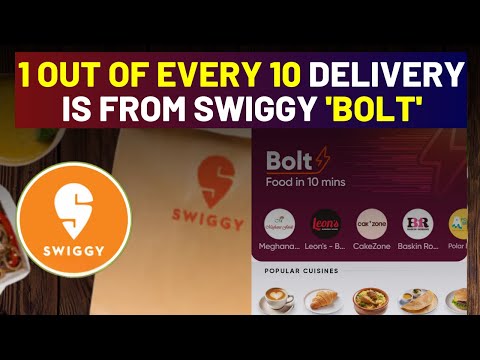
Swiggy’s rapid delivery arm, Bolt, has quickly evolved into one of the most powerful growth engines within the company’s expanding portfolio, redefining how urban India consumes food and essentials. According to Restaurant India’s report by Saptopriya Ghosal, Bolt now accounts for 10 percent of all orders placed on Swiggy, a remarkable shift that highlights how deeply quick commerce has woven itself into everyday consumer behaviour. What began as a simple experiment in ten-minute grocery delivery has transformed into a full-fledged ecosystem of instant fulfilment, catering not only to essentials but to meals, snacks, beverages, bakery items, late-night cravings and spontaneous indulgences. Urban consumers, driven by busier lifestyles and an increasing preference for convenience, now view speed as a key component of their daily routines. Swiggy has responded to this shift by strengthening the Bolt infrastructure—optimising dark stores, boosting fleet numbers, and building stronger partnerships with neighbourhood brands—to ensure that the platform remains consistently fast and reliable. The larger market context shows that India’s quick commerce segment has crossed over 50 million monthly orders, underscoring the extraordinary momentum this category has generated. As demand surges, Swiggy is aggressively expanding Bolt into newer pin codes, especially in micro-markets where instant delivery is growing faster than traditional food orders, signalling a new phase in the company’s growth strategy. The competitive landscape is heating up as well, with Swiggy, Zomato and Blinkit locked in a race where speed has become the ultimate differentiator. Consumers today expect their pani puri kits, cold coffees, emergency cooking ingredients, celebratory treats or comfort meals to arrive almost immediately, and this expectation is reshaping the broader food ecosystem. Restaurants, especially cloud kitchens, are now adapting their operations to suit the realities of quick commerce. Many operators are simplifying recipes, designing menus that require minimal preparation time, optimising packaging for rapid dispatch, and streamlining internal processes to fit into the tighter delivery windows dictated by platforms like Bolt. This shift shows how quick commerce is not only influencing customer behaviour but also transforming supply-side operations. The impact of instant delivery is visible in the way people structure their routines—whether it’s rushed office lunch hours, relaxed weekend snacking, evening cravings, or spontaneous get-togethers, consumers increasingly depend on fast delivery as a seamless extension of their lifestyle. The adoption curve has been steep, with customers naturally absorbing instant delivery into their everyday habits without hesitation. Bolt touching 10 percent of all Swiggy orders reflects not just transactional growth but a structural change in how Indians choose to eat and shop. This milestone indicates that quick commerce has moved beyond being a secondary convenience option and is rapidly becoming one of the primary consumption channels in urban India. Moving forward, Swiggy is expected to push Bolt even deeper into the market by adding more cities, improving delivery times, and expanding product categories to include fresh, gourmet and premium offerings. The next wave of innovation in this space will likely revolve around improving delivery accuracy, enhancing hyperlocal partnerships, perfecting dark store inventory models and ensuring faster customer fulfilment. As competition intensifies and customer expectations continue to rise, the players that can balance speed, consistency and operational efficiency will hold a decisive advantage. The quick commerce revolution is still in its early stages in India, but its trajectory is clear: it is reshaping consumer behaviour, redefining how businesses operate and transforming the overall food and essentials delivery landscape. With Bolt’s strong early traction and its growing share of total orders, Swiggy is positioning itself at the forefront of this shift. What was once a convenience has now become a necessity for millions, and Bolt’s success highlights just how profoundly instant delivery has changed the rhythm of Indian urban life. As the category expands and innovations continue, quick commerce is set to play an even greater role in shaping the future of consumption, with Swiggy Bolt leading the charge in this dynamic, fast-moving space.
Watch Video
▶


Comments (0)
No comments yet. Be the first to comment.