
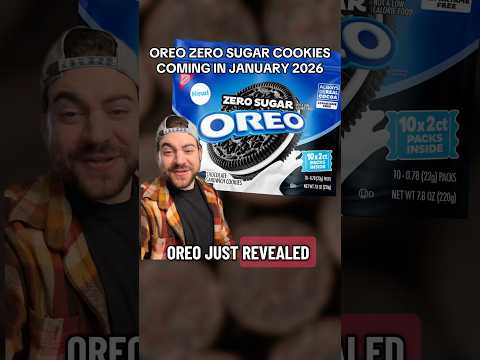
Oreo, a brand synonymous with indulgence, nostalgia, and carefree snacking, is preparing to enter unfamiliar territory with the planned January 2026 launch of its Zero Sugar Chocolate Sandwich Cookies in US stores, a move that reflects not just product innovation but a deeper shift in how legacy food brands are responding to changing consumer priorities around health, calorie consciousness, and sugar reduction. With two cookies clocking in at just 90 calories and containing zero grams of sugar, the new offering is clearly designed to appeal to a fast-growing demographic of consumers who are actively limiting sugar intake, whether for weight management, metabolic health, or medical reasons such as diabetes and insulin resistance. Yet, almost immediately after details of the launch surfaced, the product became a lightning rod for online debate, illustrating the increasingly complex and often polarized nature of modern food conversations. To recreate Oreo’s signature sweetness without traditional cane sugar, the brand has turned to a blend of artificial sweeteners and sugar substitutes, including sucralose (commonly known as Splenda), acesulfame potassium (Ace-K), and sugar alcohols like sorbitol and maltitol, a formulation choice that has reignited long-standing concerns about ultra-processed foods and synthetic ingredients. On platforms like X (formerly Twitter), critics were quick to mock the ingredient list, with viral comments comparing it to a “chemistry exam I didn’t study for” and sarcastic quips suggesting that the absence of sugar simply meant replacing one perceived evil with another, turning each cookie into a “chemistry lab in every bite.” These reactions highlight a persistent tension in the health food discourse: while sugar has increasingly been framed as a primary dietary villain, artificial sweeteners remain deeply mistrusted by a vocal segment of consumers who equate “health” with natural, minimally processed ingredients. At the same time, Oreo’s move has been warmly welcomed by another, often underrepresented audience, particularly diabetics and individuals with insulin resistance, for whom zero-sugar options are not a lifestyle choice but a necessity. On Instagram and other platforms, supportive comments emphasized inclusivity and practicality, with one user memorably stating, “For people with insulin resistance, it’s all we can have. Please let us enjoy our chemicals,” a remark that cuts to the heart of the debate by reframing artificial sweeteners not as indulgent shortcuts, but as tools that enable participation in everyday food culture. From a strategic perspective, Oreo’s decision underscores the high-stakes balancing act legacy brands face as they attempt to modernize without alienating their core audience. The brand is not claiming these cookies are “health food” in the traditional sense; instead, it is leaning on portion control, calorie transparency, and a clear “zero sugar” promise, betting that these benefits will resonate more strongly with mainstream consumers than concerns over ingredient purity. This approach aligns with broader trends in the packaged food industry, where “better-for-you” often means incremental improvements rather than wholesale reinvention, and where familiar brands leverage trust and recognition to ease consumers into new dietary compromises. Importantly, Oreo is also stepping directly into what many industry observers call the “sweetener wars,” a competitive and controversial space where brands must choose between natural sweeteners like stevia and monk fruit, sugar alcohols, or fully synthetic options, each carrying its own baggage of taste issues, digestive concerns, and public perception challenges. By opting for a multi-sweetener blend, Oreo appears to be prioritizing taste fidelity and texture, ensuring the product still delivers the sensory experience people expect, even if that means enduring online criticism. The controversy itself may not be entirely unwelcome; in today’s attention economy, debate often drives visibility, and Oreo has a long history of cultural relevance and playful engagement with internet discourse. More broadly, the launch reflects a cultural shift in how indulgence is defined, where “guilt-free” no longer necessarily means wholesome or natural, but rather controlled, quantified, and optimized to fit individual health constraints. Whether the Zero Sugar Oreo becomes a mainstream success or a niche offering remains to be seen, but its very existence signals how far consumer expectations have evolved. In an era where shoppers simultaneously demand indulgence, transparency, health alignment, and inclusivity, Oreo’s calculated risk reveals a fundamental truth of modern food innovation: there are no perfect solutions, only trade-offs, and brands that wish to stay relevant must be willing to navigate criticism from all sides while betting that their core promise, in Oreo’s case, pleasure and familiarity, can survive even the most radical reformulations.
Watch Video
▶


Comments (0)
No comments yet. Be the first to comment.