

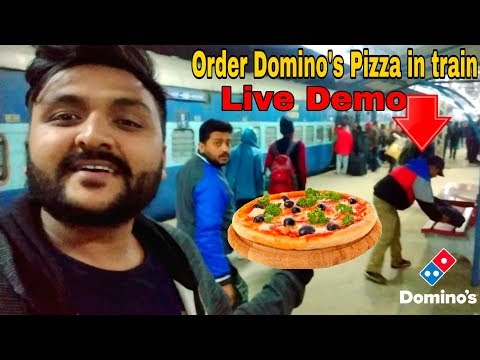
Domino’s presence on the Mumbai–Ahmedabad train recently offered a powerful glimpse into how India’s quick-service restaurant landscape is evolving. For decades, the Indian Railways has functioned on an informal food ecosystem defined by the familiar calls of “chai, chai,” “vada pav,” or “saapad,” reflecting the regional diversity and decentralised structure of how millions of Indians eat while travelling. This system is rooted in speed, convenience, and hyperlocal relevance—qualities that modern brands aspire to replicate. Which is why seeing a young vendor walking down the aisle of a 2-tier AC coach with a branded Domino’s thermal delivery bag and offering ₹99 pizzas—Jain, veg, cheese, and corn—felt like a significant marketing moment. It wasn’t app-based ordering or a scheduled station delivery. It was Domino’s inserting itself directly into the unorganised, high-frequency railway hawker network. From a marketing perspective, this signals a strategic shift in how QSR brands can rethink distribution. First, it highlights how hyper-local channels are no longer limited to kirana stores or neighbourhood deliveries; they now include one of India’s most complex, high-volume mobile marketplaces—the trains. By being present where consumers already are, Domino’s maximises touchpoints and eliminates friction in the purchase journey. Second, the brand is leveraging its trust advantage. For travellers who might hesitate with unknown railway food, a recognised branded product becomes a safer and more reliable alternative, creating a form of “branded spontaneity” where a premium offering seamlessly fits into a mass-market environment. Third, it reflects a broader trend: the merging of India’s organised and unorganised food sectors. We’ve already seen Domino’s hawkers in cricket stadiums; now, trains represent the next frontier. Consumers today expect brands to be omnipresent—whether they are cheering in stands, waiting at airports, strolling in malls, or journeying by rail. Domino’s tapping into this informal ecosystem shows how agile brands can unlock new sales channels, capture impulse purchases, and strengthen visibility without relying solely on traditional retail formats. Whether this initiative was a formal pilot, a franchise-driven innovation, or an enterprising delivery agent’s idea, the impact remains the same: Domino’s is reshaping the way QSRs approach distribution in India. This blend of formal branding and informal selling showcases how adaptability can open new avenues in a country where mobility, convenience, and immediacy drive consumption. Ultimately, what unfolded on that train was more than an unusual sight—it was a strategic reflection of India’s transforming F&B landscape. It signals that the next wave of marketing innovation may not come from digital campaigns or in-store experiences, but from embedding a brand into everyday Indian environments, even those as unstructured and dynamic as a moving train aisle. Domino’s has not just met consumers where they are—it has stepped boldly into a space long dominated by local hawkers, turning a simple ₹99 pizza into a case study in distribution brilliance.
Watch Video
▶


Comments (0)
No comments yet. Be the first to comment.