
Nescafé’s RTD Coffee Market Grows 23% Year-on-Year, Driven by Gen Z and Small-Town India
For millennials, the cold coffee craze began somewhere between Café Coffee Day catch-ups and “Frappuccino runs,” when coffee wasn’t just a beverage—it was a lifestyle statement. Fast-forward to today, and while the drink remains as popular as ever, the ritual around it has evolved. Coffee no longer requires a café, a barista, or even a long line; it now comes in a can, chilled and ready to sip, perfectly in sync with India’s quick-commerce revolution.
Nescafé, Nestlé India’s flagship coffee brand, sits squarely at the center of this shift. The company has identified a rapidly emerging market for ready-to-drink (RTD) cold coffee—one that’s young, digital, and increasingly thirsty for caffeine on demand. The segment may currently represent just 0.2% of India’s ₹1 trillion cold beverage market, but according to internal Nescafé data, it’s growing fast and holds immense potential.
A Market That’s Just Warming Up
“Over the last two years, the CAGR of the RTD cold coffee category has been around 23%,” says Manav Sahni, Head of Dairy Business at Nestlé India. “The category is valued at approximately ₹2 billion, compared to ₹504 billion for carbonated soft drinks. It’s small, but that’s exactly where the opportunity lies.”
The company’s optimism is grounded in the evolving preferences of India’s younger consumers. The country’s warm climate, its growing youth population, and a digitally driven lifestyle make it ripe for a cold coffee boom. Unlike previous generations that leaned toward tea, India’s Gen Z and millennials are crafting their own beverage culture—one that celebrates indulgence, energy, and convenience.
Sahni is quick to clarify that Nescafé’s goal isn’t to compete directly with sodas or juices. “We’re not pitting cold coffee against aerated drinks,” he says. “It’s about the throat—another option when you’re thirsty or seeking an indulgent drink.”
Café Indulgence at a Pocket-Friendly Price
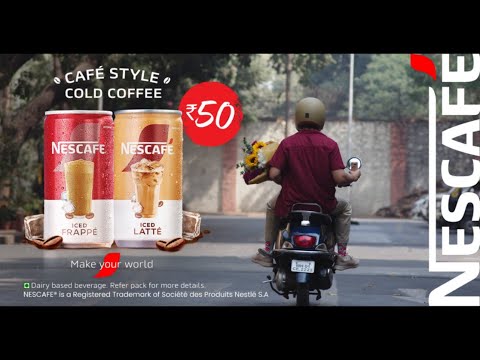
To bring café-style indulgence to everyday consumers, Nescafé relaunched its Café-Style Cold Coffee line, offering a premium taste at an accessible price. The 170 ml can retails at ₹50, while the larger tall can is priced at ₹70. Competing RTD coffees often cost between ₹120 and ₹150, positioning Nescafé as an affordable luxury—a key factor for its young target audience.
This strategy taps into a growing behavioral trend: self-reward through small indulgences. For many Gen Z consumers, ordering a chilled coffee during a study break or after work has become an act of comfort and self-care. Nescafé has built its narrative around this emotional connection, presenting its product as the perfect midday pick-me-up—part nostalgia, part necessity.
Gen Z’s Drink of Choice
“Tea is their parents’ drink,” Sahni says with a laugh. “Coffee has become their preferred beverage, and most start with cold coffee.” This shift is visible not only in cafés but also in how people buy their beverages. Platforms like Zepto, Blinkit, and Swiggy Instamart have turned coffee into an impulse category, much like a chocolate bar or soft drink.
Quick commerce has become one of Nescafé’s most dynamic growth engines. The appeal lies in speed—cold coffee can now be ordered and delivered in minutes, aligning perfectly with Gen Z’s “want it now” mindset. This digital convenience has blurred the lines between beverage consumption and snacking behavior, turning cold coffee into an everyday essential rather than an occasional treat.
Surprisingly, this growth story extends beyond metros. Tier 2 and Tier 3 cities—such as Nagpur, Imphal, Aizawl, and Tripura—are rapidly catching up, contributing significantly to Nescafé’s sales. “Coffee, it turns out, is no longer a metro or monsoon habit,” says Sahni. Even in North India’s winters, sales have remained steady or shown an upward trend, underscoring how deep-rooted the beverage has become in Indian culture.
Digital First: 88% of Marketing Spends Online
If the product is built for the always-connected generation, the marketing strategy mirrors their digital lifestyle. A striking 88% of Nescafé’s marketing budget now goes to digital media—an acknowledgment of where its consumers live, shop, and engage.
“For Gen Z and millennials who spend six to seven hours a day on their phones, it’s crucial to engage them on that six-inch screen,” Sahni explains. The brand’s campaigns stretch across YouTube, Meta, OTT platforms, and even connected TVs, using short, snappy edits of 6, 10, and 20 seconds tailored for each platform.
On YouTube, Nescafé’s storytelling focuses on everyday realism—students waiting for a bus, office-goers catching a break, or college friends hanging out. On Meta, the tone shifts toward sensory storytelling, using close-up shots of swirling foam and chilled cans to evoke taste and indulgence.
Nescafé also broke new ground by integrating with gaming streams, a first for an Indian beverage brand. Viewers could scan QR codes during live streams to instantly order a cold coffee from quick-commerce apps. “It wasn’t intrusive advertising,” says Sahni. “It was contextual, and it worked.”
Beyond digital screens, the brand has leveraged geo-targeted activations near colleges, malls, and youth-centric zones. Using PIN code–based targeting, it ensures its ads reach the right consumers at the right place. OTT and connected TV campaigns help in retargeting users who’ve interacted with Nescafé on YouTube, creating a cohesive, cross-platform engagement loop.
A Pan-India Cultural Shift
What stands out in Nescafé’s growth journey is how cold coffee has transcended its urban and elite image. Once considered a café-exclusive indulgence, it has now become a comfort beverage across the country. From Chennai to Chandigarh, the drink resonates as both familiar and aspirational.
India’s long-standing “milk-drink DNA” gives cold coffee an edge over black coffee or imported energy drinks. The combination of milk, caffeine, and sweetness creates a hybrid appeal—energizing yet dessert-like. Consumers are no longer just looking for refreshment; they’re seeking indulgence, flavor, and emotional satisfaction.
This explains why cold coffee is currently the second-fastest-growing segment among non-alcoholic beverages, trailing only energy drinks. It fits seamlessly into India’s evolving beverage culture—one that values both convenience and comfort.
The Health-Conscious Horizon
Even as indulgence drives current growth, Nestlé India is keeping a close eye on the country’s increasing focus on health and wellness. With calorie counting and “macro-tracking” gaining popularity among younger consumers, the next wave of RTD innovation is likely to lean toward “better-for-you” formats.
Globally, Nescafé has already begun experimenting with functional variants—protein-based cold coffees in Latin America and low-calorie options in Malaysia and Thailand. In India, however, Sahni says the focus remains on strengthening the indulgent core before branching into health-driven versions. “We want to first make indulgence universal before making it functional,” he explains. “But yes, healthier variants are definitely part of the long-term play.”
From “Thanda” to “Café-Style”
For decades, “Thanda” belonged to colas—a symbol of coolness and refreshment. Nescafé is now trying to carve out its own emotional space with the phrase “Café-Style,” one that evokes both quality and comfort. “That’s our emotion and our identity,” Sahni says.
By positioning itself as the go-to brand for chilled indulgence, Nescafé is not merely selling a beverage—it’s building a new ritual. One chilled can at a time, it’s redefining what it means to take a coffee break in a country that’s as digital as it is diverse. The result is a uniquely Indian coffee culture—rooted in nostalgia, powered by convenience, and led by a generation that wants its coffee cold and its gratification instant.
Watch Video
▶


Comments (0)
No comments yet. Be the first to comment.