

When Flipkart says “Kuch Bhi Ho Sakta Hai” (Anything is possible), it isn’t just a slogan—it’s a promise. This year’s Big Billion Days campaign leans into that spirit with a star-studded, surprise-filled film that takes everyday shopping into a world of extraordinary experiences. Conceptualised by Leo India (formerly Leo Burnett), the campaign redefines how e-commerce advertising blends storytelling, celebrity appeal, and consumer aspirations.
The Concept: Turning Shopping Into Magic
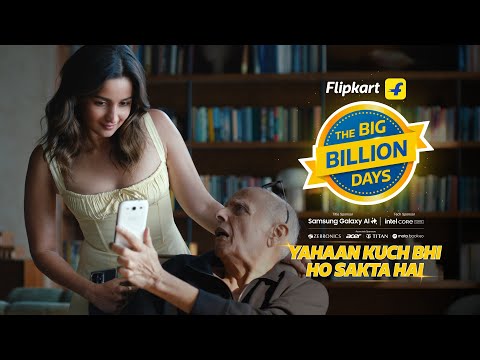
The three-and-a-half-minute film begins innocuously: a young woman shops on Flipkart for a few items. But what follows is pure fantasy. She arrives at a venue in an auto-rickshaw, only to be granted VIP entry. She steps into a lift and finds Alia Bhatt casually waiting inside. Soon after, Amitabh Bachchan enters the frame—and, in true absurdist style, all of them share the same pineapple phone cover.
The world is playful, unexpected, and surreal. It’s Flipkart’s way of saying that during Big Billion Days, shopping goes beyond discounts and deals—it transforms ordinary moments into magical experiences.
Chief creative officer Sachin Kamble sums it up: “Big Billion Days is like IPL for Flipkart. Every year we try to outdo ourselves. This time, the brief was simple: the sale isn’t just about shopping; it’s about the magic shopping creates in people’s lives.”
Managing a Galaxy of Stars
One of the campaign’s most striking elements is its ensemble cast. The lineup reads like a mini red carpet: Amitabh Bachchan, Alia Bhatt, Mahesh Bhatt, Farah Khan, Sreeleela, Aman Gupta (boAt), comedian Anubhav Singh Bassi, music producer Yashraj Mukhate, entrepreneur Ankur Warikoo, social media stars like Jannat Zubair and Sakshi Shivdasani, and internet personalities such as Dolly Chaiwala. At the centre of it all is Arista Mehta, the young protagonist whose shopping spree sets the story in motion.
But managing such a roster was no easy feat. “People think adding celebrities makes the job easy. But the more stars you add, the harder it gets,” Kamble explains. “Every star has to have a meaningful part. You can’t write jokes around them unless you know their personality.”
The creative team spent three months writing, revising, and aligning with both Flipkart and the celebrities’ schedules. To streamline production, the three-day shoot was carefully structured. Amitabh and Alia were filmed separately, while the rest of the ensemble came together in choreographed bursts.
The meticulous planning paid off. “On the day of the shoot, everything went smoothly because everyone knew exactly what their job was,” says Kamble.
The Shopper as the True Hero
While the celebrity roster grabs headlines, the campaign is careful not to let star power overshadow the narrative. The real protagonist is the young woman whose Flipkart shopping triggers this fantastical journey. “The celebrities are there to live her journey. She’s the one becoming a superstar overnight,” Kamble emphasizes.
This focus grounds the campaign in consumer relatability. Viewers are invited to see themselves in the protagonist’s shoes—shopping on Flipkart, buying quirky items like the pineapple phone cover, and imagining a world where anything, literally kuch bhi, can happen.
Production & Costs
Pulling together a spectacle of this scale came with a hefty price tag. While Kamble did not reveal celebrity deal figures, he indicated that production costs alone (excluding star fees) ranged between ₹5–7 crore.
But for Flipkart, the spend is strategic. The Big Billion Days sale is its flagship annual event, equivalent to an IPL season in terms of scale and significance. By leveraging both traditional media and celebrity-led social amplification, Flipkart ensures maximum reach while reducing dependency on paid ads.
Pan-India Casting & Cultural Appeal
Flipkart deliberately avoided limiting the campaign to Bollywood. Regional and cultural inclusivity was a priority, reflected in the presence of South star Sreeleela and a variety of creators from different entertainment spheres.
“We wanted surprises every 10 seconds,” Kamble explains. “So whether it’s a Bollywood name, a stand-up comic, or a regional artist, the idea was to keep viewers guessing—and smiling.”
This diverse casting strategy strengthens Flipkart’s pan-India appeal, ensuring that audiences from different geographies and cultural backgrounds find representation.
Editing Down to Perfection
The campaign originally had a longer cut—nearly five minutes. But the team trimmed it down to a tighter 3.5 minutes. “Every joke, every celebrity, every beat had to earn its place,” Kamble says.
The shorter version maintains the narrative’s energy, delivering a constant stream of surprises while ensuring audiences stay engaged.
Standing Apart from Dream11
Given its ensemble cast, Flipkart’s film inevitably drew comparisons with Dream11’s celebrity-heavy ads featuring Aamir Khan, Rohit Sharma, and Ranbir Kapoor. Kamble acknowledges the overlap but draws a clear distinction.
“Yes, both have many celebrities and run for a few minutes. But in our film, the protagonist’s story is at the centre. Every celebrity is there to make her life better. We also differentiated with music, using a rap background and keeping the surprises coming every few seconds. That’s what makes it unique,” he explains.
Where Dream11 uses celebrities to poke fun at each other in sketch format, Flipkart uses them to elevate the shopper’s journey.
Beyond One Big Film
The campaign is not limited to its three-minute centrepiece. Leo and Flipkart have rolled out category-specific cutdowns—fashion, mobiles, beauty, and appliances—each starring marquee names like Amitabh and Alia.
The rollout was carefully phased. The initial film launched without revealing sale dates, designed to feel like viral content rather than an outright ad. Subsequent cuts and print creatives then carried sale details, ensuring intrigue transitioned into action.
This layered strategy kept the buzz alive across platforms, sustaining audience engagement through multiple touchpoints.
A Campaign That Matches the Sale’s Scale
For Flipkart, Big Billion Days isn’t just another promotion—it’s the pinnacle of its retail calendar. The “Kuch Bhi Ho Sakta Hai” campaign mirrors that ambition. With its audacious celebrity mix, surreal storytelling, and pan-India inclusivity, it captures the excitement and unpredictability of the sale itself.
It also illustrates a shift in brand storytelling—where advertising is no longer about pushing deals but about creating cultural moments that resonate beyond the sale window.
In Kamble’s words: “Every year we try to outdo ourselves. This time, we wanted something massive, something magical.” And massive it is. From pineapple phone covers to Bollywood megastars, Flipkart proves that during Big Billion Days, truly kuch bhi ho sakta hai.
Watch Video
▶


Comments (0)
No comments yet. Be the first to comment.