
Marketing technology, or martech, was supposed to make marketing smarter, measurable, and more efficient. But in reality, fractured stacks and poorly developed use cases have turned it into an expensive labyrinth that often fails to deliver on its promise. A recent McKinsey & Company paper titled “Rewiring Martech: From Cost Centre to Growth Engine” highlights this disconnect starkly. The consulting firm found that most marketing leaders are unable to quantify returns on their martech investments, and not one of the fifty-odd senior marketing executives from Fortune 500 companies interviewed could clearly articulate the ROI of their organisation’s martech stack or how it was driving tangible business value. Many senior marketers admit that they lose customers not because of poor products or communication, but due to the limitations of their martech systems themselves. Disconnected data silos and incompatible tools make it difficult to create a unified customer view, resulting in inaccurate personalisation, delayed responses, or missed engagement opportunities.
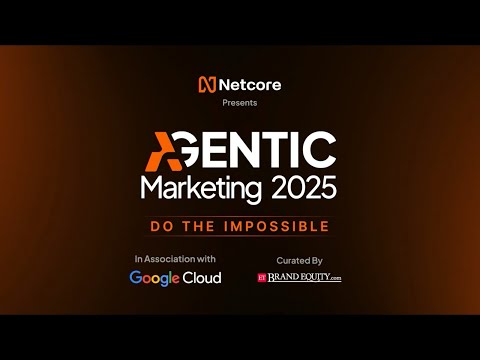
Today, brands are spending nearly 90% of their marketing budgets on adtech — technologies designed to acquire new customers. However, according to Rajesh Jain, Founder and Managing Director of Netcore Cloud, a significant chunk of that money — close to 70% — is actually being spent on reacquiring customers the brand already had but lost due to dormant engagement. “This means brands are paying repeatedly to monetise the same customer because their martech systems are leaving the door open for churn,” Jain points out. The inefficiency is staggering, but it also underscores a massive opportunity: to build systems that don’t just collect and process data, but actively interpret, react, and optimise it in real time. This is where Jain introduces the concept of agentic marketing, a leap beyond traditional martech that leverages autonomous yet supervised AI agents to solve marketing’s most complex challenges.
Earlier this year, Netcore Cloud unveiled nine specialised AI agents, each dedicated to a core marketing function—from customer journey orchestration to content generation and analytics. While generative AI has already proven useful for producing content faster, better, and cheaper, Jain’s vision for agentic AI is more ambitious. He believes these multi-agent systems can tackle the “impossible problems” that have long plagued marketers: reactivating dormant customer bases, reducing customer acquisition costs, and achieving true hyper-personalisation—what he calls N = 1 marketing. “What these single-agent and multi-agent systems will do is solve the most important problem in marketing—how do I get the right message to the right person at the right time,” Jain says.
The marketing problem, at its core, is deceptively simple. Every marketer aims to deliver relevant, timely, and meaningful experiences. Yet, despite years of segmentation and analytics, most brands still rely on broad demographic clusters or static audience segments that fail to capture the complexity of human behaviour. Consumers end up inundated with irrelevant offers because the data available is either insufficient, fragmented, or too slow to act on. With agentic systems, this bottleneck is removed. Jain explains that brands can now create up to 500 micro-segments and push out contextualised content within minutes. This means that if a cyclone hits a region, a life insurance brand can quickly respond with relevant messaging, or if a Taylor Swift concert is trending, lifestyle brands can instantly craft contextual campaigns to tap into the cultural moment.
Central to this evolution is the concept of brand twins—digital replicas of customers that continuously learn and adapt from every interaction. These brand twins evolve with the user, building increasingly accurate models of individual preferences, behaviours, and triggers. Jain describes this as creating a “Department of One for a Segment of One,” where even small marketing teams can deliver truly individualised experiences to millions of customers at once. This convergence of automation, intelligence, and personalisation represents a seismic shift from the static dashboards and pre-programmed workflows of the martech era to an ecosystem that learns, thinks, and acts dynamically.
However, with speed comes the risk of error. As Jain acknowledges, “Speed unlocks new opportunities, but also new mistakes.” To address this, human oversight remains embedded at every stage of the agentic marketing process—from defining the problem statement and setting up customer segments to selecting communication channels, generating content, and finally, deploying campaigns. Marketers can intervene, edit, or override outputs in line with brand guidelines at any point. While it’s impractical to manually validate hundreds of AI-generated pieces of content, Netcore has implemented several guardrails to minimise risks such as hallucination or deviation from brand identity. One such safeguard is the creation of a brand sandbox—a tightly defined space within which the AI operates, governed by pre-set rules for tone of voice, brand colours, and messaging frameworks. This sandbox approach keeps the AI predictable and consistent, ensuring that automation never comes at the cost of authenticity. Jain envisions a future where these systems become so attuned to brand codes that human intervention will eventually become optional—but admits that we’re not quite there yet.
Of course, the promise of agentic marketing also raises concerns about reliability and continuity. What happens if the system goes down? The global AWS outage in October 2025 was a stark reminder of our dependence on cloud infrastructure. Ecommerce sites froze, banking apps failed to process transactions, and gamers were locked out of online platforms. But Jain is quick to contextualise such incidents. “While outages like this get a lot of attention, they typically affect less than 0.01% of operations. We’re still operating at 99.99% uptime, and with proper SLAs in place, the system is resilient enough to handle such disruptions,” he reassures.
If technology is one half of the martech failure story, the other half lies in how organisations measure success. According to McKinsey, one of the main reasons martech has failed to deliver measurable ROI is because it has been treated as a one-time purchase rather than a continuously evolving growth engine. Instead of linking marketing performance to revenue growth, customer lifetime value, or strategic business outcomes, most teams still rely on surface-level metrics such as email open rates, impressions, and campaign reach—numbers that reveal activity, but not impact. Netcore aims to change that narrative with an innovative outcome-based pricing model called Alpha.
Unlike the traditional structure of fixed platform fees and per-user or per-message charges, Alpha ties pricing directly to revenue outcomes. The platform aligns its success with the client’s success—if both sides exceed expectations, Netcore shares in the alpha, the upside achieved beyond projected targets. Jain explains, “Martech has historically been input-driven. We’ve priced based on the number of messages sent, the number of monthly active users, or API calls in the case of search businesses. These are all input metrics. No one in this industry has implemented true outcome-based pricing.” Under Alpha, outcomes are pre-agreed upon and customised to the client’s industry and goals, creating an incentive structure that rewards actual performance rather than activity.
As the marketing landscape races toward a future of machine-to-machine interactions, the question remains: will algorithms finally solve marketing’s “impossible problems,” or will they add another layer of complexity to an already tangled ecosystem? For now, agentic marketing offers a compelling answer—a hybrid model that combines the analytical power of AI with the intuition and oversight of human marketers. It promises to turn martech from a cost centre into a genuine growth engine, capable of delivering precision, speed, and measurable impact at scale. Whether this marks the end of martech’s struggle or just the beginning of a new chapter, one thing is clear: the next evolution of marketing will not be powered by technology alone, but by intelligent systems designed to think, learn, and grow alongside the brands they serve.
Watch Video
▶


Comments (0)
No comments yet. Be the first to comment.