Tea has a way of inserting itself into every conversation. A slow news day, a big cricket match, terrible AQI, a bad week at work and somewhere on your social feed, someone is posting about chai. Brands have understood this for years. Tea is one of the easiest topics to ride in moment marketing, because it is genuinely relatable and almost never feels out of place. A meme about chai paired with a trending topic. A post about the first cup of the morning timed to a Monday. A gentle dig at someone who drinks coffee instead. The format is familiar, the audience is ready, and the engagement follows.
Social media humour has, in many ways, been shaped by tea. The chai-wallah who has an opinion on everything. The office group chat where the only thing everyone agrees on is a tea break. The person who claims they only want half a cup and finishes three. These observed behaviours have been given a wider stage on the internet, and brands have been quick to follow.
But the moment everyone is doing the same thing, the advantage disappears. Tea is among the most cluttered FMCG categories in India, with national players, regional brands, and newer wellness-focused labels all competing for the same consumer's attention, often using the same cultural tactics to do it. In a category where everyone talks about chai, what gives a brand a coherent, consistent identity across advertising, social media, and on-ground marketing?
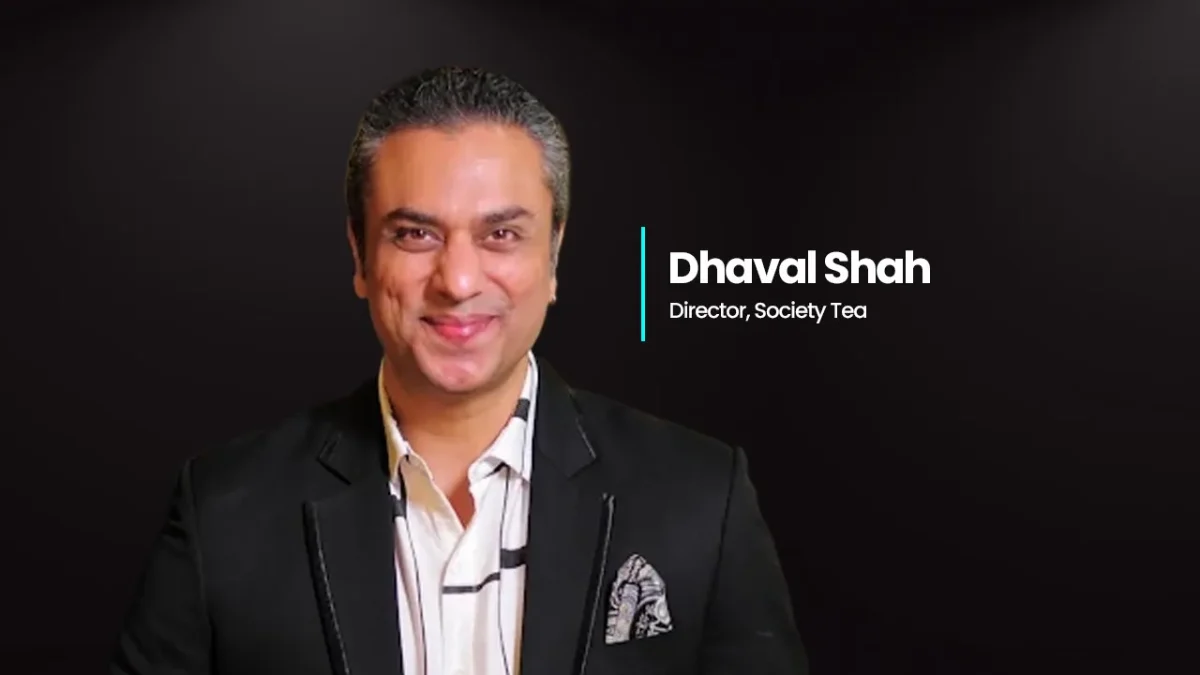
For Dhaval Shah, Director at Society Tea, the answer comes back to something specific. "The territory we want to own is the freshness of everyday life that truly serves a purpose in our daily lives. Tea is a multi-functional thing — it wakes you up, it gives you a pause, it brings people together. Society Tea has always been about the freshness that feels authentic, not performative. Whether it's the first cup in the morning or the cup at the end of the day with the family, our aim is to capture that truth."
That truth has a large market behind it. The Indian tea market generated revenue of USD 12,140.1 million in 2025 and is projected to reach USD 20,459.8 million by 2033, growing at a CAGR of 6.8%. Black tea remains the largest revenue-generating segment, while herbal tea is registering the fastest growth. The market is vast, the consumer base is multigenerational, and the category cuts across income groups and geographies in a way few FMCG products can claim.
A brand steeped in Maharashtra’s tea culture
In Maharashtra, Society Tea has been operating in this market for longer than most. Its origins trace back to 1924, when Hiravan Pranjivandas set up as a tea wholesaler in Mumbai's Masjid Bunder, in the lanes then known as Chai Galli. In 1933, the business formalised as Hasmukhrai & Co., with its first retail shop in Kalbadevi. By the late 1980s, it had become the market leader in Mumbai. In 1991, sensing that consumers would shift toward packaged tea, Hasmukhrai & Co. launched Society Tea in packet form, available across Maharashtra. Today, the brand holds approximately 40% of Maharashtra's packaged tea market, as per industry reports.
The name Society was deliberate. The idea was that tea does not belong to any one age group or type of person; it belongs to the whole society. This influenced how the brand went to market. What followed was a series of campaigns that tried to reflect tea in the context of contemporary Indian life. A couple practising yoga, sharing a chai moment. A Parsi couple used to connect with different communities within Maharashtra and many more.
Through this period, Society Tea managed to hold its ground even as multinationals spent heavily in Maharashtra.
"Society Tea has always been a part of the fabric of Indian life, but now the challenge is to cut through what we believe in the consumer's mind," Shah says. The past year, he explains, has been about bringing more clarity to the brand's communication, remaining culturally relevant without compromising on what the brand stands for. The goal, as he frames it, is not simply to be heard, but to be seen and felt in the spaces where the consumer is already interacting with tea as a daily habit.
Keeping the conversation going from memes to mass media
That clarity has shaped how the brand shows up on social media today. We all remember when thieves staged a daylight heist at the Louvre in Paris, stealing over USD 100 million in French crown jewels? Well, brands across categories moved quickly to join the conversation. Society Tea posted an image of a sleeping security guard with the caption: "A cup of tea would've helped." The joke was dry, the reaction was fast, and the brand's connection to the moment felt earned.
Comments (0)
No comments yet. Be the first to comment.