
Like a Parisian lover who once swept you off your feet with unexpected fervour only to withdraw, return, and attempt to rekindle the flame, French automaker Renault seems determined to follow a similar arc in India. The country’s automotive landscape—now among the world’s most dynamic markets—produced more than 50 lakh passenger vehicles in FY25, a scale that demands relentless reinvention from any brand hoping to hold its place. Renault, after years of silence, now wants back in.
The company’s earlier romance with India was, in fact, a memorable one. The Renault Kwid, launched in 2015, made an immediate splash. The stylish yet accessible hatchback redefined entry-level expectations with its SUV-inspired stance and modern features at an aggressive price point. The Renault Duster, meanwhile, was instrumental in shaping India’s SUV narrative long before the category became the default choice for families across the country. These two nameplates gave Renault an identity: bold, disruptive, and attuned to Indian tastes.
Yet in recent years, Renault slipped into the background as the automotive spotlight shifted to domestic heavyweights like Tata Motors and Maruti Suzuki, as well as perennial competitor Hyundai. The company, once a strong challenger, began to lose momentum. Francisco Hidalgo, Renault India’s vice president of sales and marketing, does not shy away from the reasons.
“Our numbers have been declining slightly for a simple reason — we did not launch new cars or new features for two or three years,” he admits.
Renault’s stagnation, Hidalgo explains, wasn’t born out of neglect but a series of global shocks. The Covid-19 pandemic disrupted supply chains, delayed product cycles, and forced companies to rethink geographic priorities. But the bigger blow came from the Russia-Ukraine war. Renault had long held the position of the largest carmaker in Russia, commanding more than 30% of the market. With the conflict and resulting sanctions, that business was abruptly upended. European legal compliance added further complexities, leaving Renault to recalibrate its global strategies and timelines.
“In that period, it is fair to say we did not bring novelty to India,” Hidalgo says—a misstep he considers especially costly. “And that is the worst possible way to treat an Indian car buyer.”
Indian customers, he insists, are among the world’s most demanding—not only on price, but on freshness, features, technology, and the constant quest for something new. He cites the sunroof phenomenon as an example: a feature that is often impractical in India’s scorching summers and unpredictable monsoons, yet increasingly non-negotiable for buyers.
“It is an illogical choice. Most people keep it closed and yet it is a must-have,” he remarks, illustrating how emotional and status-driven the Indian automotive purchase can be.
To regain its relevance, Renault is now rethinking everything—from its product pipeline and brand positioning to the very experience of stepping into a dealership. Hidalgo believes customers today enter showrooms not for information, but for reassurance, emotion, and the feeling of being understood.
“Customers study specifications online and, by the time they walk into a showroom, they mostly know what they want,” he explains. “When people come to the showroom, they are looking for something else. We want them to feel at home.”
This insight is driving one of Renault’s most unusual but interesting strategies: reducing the number of cars on display. A less crowded floor, Hidalgo argues, creates a calmer, more inviting environment. “If you have to take a decision about the new car, make sure you are relaxed enough to take the right decision.” In this redesigned retail concept, refreshed versions of the Triber and Kiger will be the key attractions.
The broader turnaround plan is called Renault.Rethink—a clear statement of intent aimed at Indian consumers, dealers, and the market at large. The message is straightforward: Renault is not here to retreat; it is here to rebuild. “In India, I think it's very clear that either you go all in, or just don't go,” says Hidalgo. “We have to make a clear commitment to India that we are here to grow; we are here to stay, we are here to develop our business.”
The company has already begun backing this claim with action. One of the most significant moves is taking full control of its manufacturing facility in Chennai, previously operated jointly with Nissan. This gives Renault greater autonomy over production, quality, and product timelines—critical factors in a market that rewards agility.
Simultaneously, the company is working on new models specifically designed for India, revisiting its core strengths of innovation and disruption. Over the years, Renault believes it has become too closely associated with affordability—a trait that served it well initially but eventually limited its aspirational appeal.
“We have forgotten a little bit some of the things that made us really strong in the market, which is this capacity to bring something new and disrupt the market,” Hidalgo reflects. With the new strategy, Renault wants to balance value with desirability, making sure it speaks to both practical and emotional needs.
Marketing, too, is being restructured. To signal its renewed commitment, Renault plans to return aggressively to television advertising—a medium it had deemphasized during its quieter years. Television will be followed by more precise digital targeting aimed at younger, tech-savvy consumers who rely heavily on online research and influencer validation. The idea is to rebuild visibility, trust, and clarity around what Renault represents in 2025 and beyond.
Whether India is ready to welcome the Parisian carmaker back with open arms remains to be seen. The Indian automotive space is more competitive than ever, with EVs reshaping consumer expectations and every major brand investing deeply in product cycles and technology. But Renault’s renewed energy, combined with India’s appetite for fresh choices, may give the brand a promising opening.
Renault believes the story is far from over. The next chapter, according to Hidalgo, is about reclaiming the company’s original identity: bold, original, and unafraid to challenge conventions.
Much like that old Parisian romance, Renault hopes that India, too, might remember the spark that once existed—and perhaps fall in love all over again.
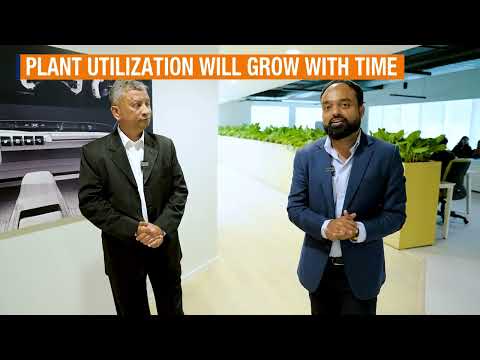
Watch Video
▶


Comments (0)
No comments yet. Be the first to comment.